Bij Halloween
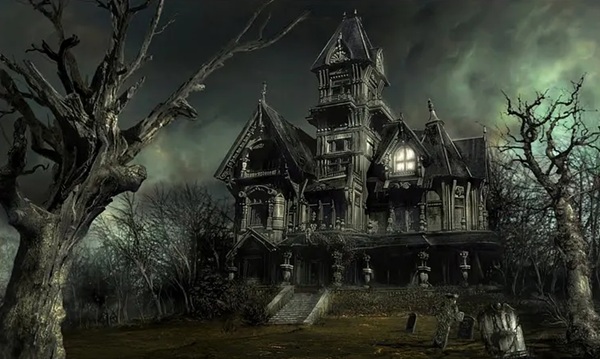
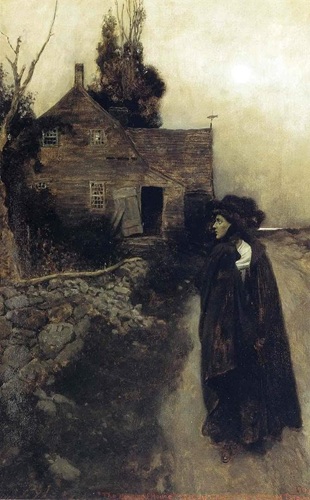
Haunted House
Here was a place where none would ever come
For shelter, save as we did from the rain.
We saw no ghost, yet once outside again
Each wondered why the other should be so dumb;
And ruin, and to our vision it was plain
Where thrift, outshivering fear, had let remain
Some chairs that were like skeletons of home.
There were no trackless footsteps on the floor
Above us, and there were no sounds elsewhere.
But there was more than sound; and there was more
Than just an axe that once was in the air
Between us and the chimney, long before
Our time. So townsmen said who found her there.
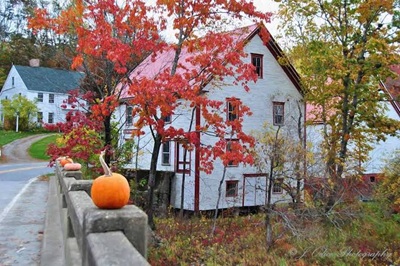
Alna, Lincoln County, Maine, de geboorteplaats van E. A. Robinson
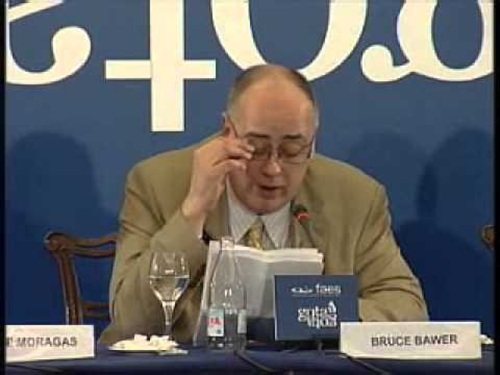
De Amerikaanse dichter, schrijver en literatuurcriticus Bruce Bawer werd geboren op 31 oktober 1956 in New York. Zie ook alle tags voor Bruce Bawer op dit blog.
Uit: The Alhambra: A Novel
“STEVE DISCH WAS ONLY TWENTY-THREE years old and still a student at UCLA Film School when his first movie came out and made him famous. Well, not really famous. Sentimental Education was what they call a “small film.” The cast consisted entirely of his friends and fellow students, and Steve himself served as writer, director, cameraman, editor, and lighting and set designer. The costumes were the actors’ own clothes, and there was no makeup to speak of, and certainly no special effects. The budget was far too tiny for that – too tiny for almost anything, in fact, except for the telling of a simple story about two characters. Steve told it effectively enough to get Sentimental Education into a couple of second-tier film festivals, at one of which it won an “audience favorite” award. The movie’s saga might have ended there, if not for a bit of serendipity. One of those festivals happened to be attended by a veteran novelist who saw Sentimental Education and loved it. He loved it so much that he wrote a glowing article about it in a national gay newsmagazine, and then another in the New Yorker, no less. This beautiful film about the deep but unspoken and unconsummated love between two male college students, he argued, was one of the best gay movies ever made, and represented a breakthrough in the cinematic treatment of gay men’s lives. Steve, in his view, had managed, with his inexpensive camera equipment and his non-professional actors, to capture precisely what love was like for young gay men in “these times” – “these times” being the 1980s -who don’t even realize they’re gay. The articles about Sentimental Education drew the attention of gay cinephiles around the world. That summer, the film was shown at gay-pride events in two dozen cities. For several months, Steve rode a roller-coaster of media attention. He received bags full of fan mail. He traveled around the U.S. and Europe attending screenings of the film. At some of these events he would give a talk before the screening; at others, he’d be interviewed or answer questions afterwards. Following every screening, audience members would line up to shake his hand and tell him how much they identified with the main character in his movie. Invariably, at those Q & A’s, somebody would ask if the film was autobiographical. Steve always insisted it wasn’t. He was lying. Virtually every line of dialogue had come directly out of the diary he’d kept as an undergraduate at the University of California at Davis. It was there that he’d met Daniel Loban, a fellow French major. The two star-crossed lovers in the movie weren’t just based on Steve and Daniel; they were Steve and Daniel.”
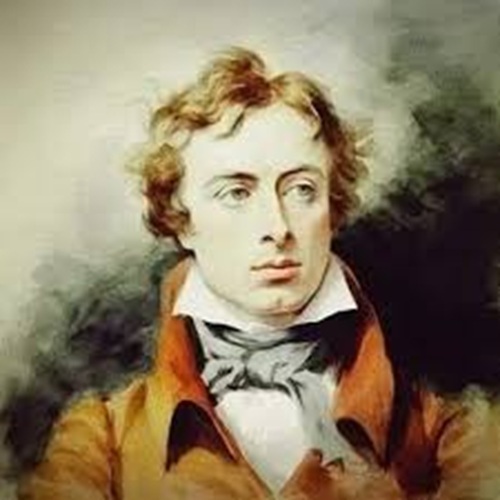
De Engelse dichter John Keats werd geboren op 31 oktober 1795 in Finsbury Pavement in Londen. Zie ook alle tags voor John Keats op dit blog.
Ode aan een nachtegaal
I
Mijn hart doet pijn, bedwelming houdt mijn hoofd
Beklemd, als had ik scheerlingsap gedronken
Of had een drank verzwolgen die verdooft,
Zo-even, en was Lethewaarts gezonken.
’t Is niet uit afgunst jegens uw geluk:
In uw geluk vind ik geluk te over,
Omdat gij, boomdryade, lichtgeveerd
In een zoetklinkend stuk
Van ’t groene, schaduwrijke beukenlover
Orgelend van de zomer kwinkeleert.
II
O, nu een dronk! Wijn, die men koel bewaarde
In diepgedolven grond, geruime tijd;
Die smaakt naar Flora, naar de groene aarde,
Dans, Provençaalse zang, gebruind jolijt!
Nu een bokaal die ’t warme zuiden bood,
Vol van de blos der echte Hippocreen,
Met pareling van belletjesgeflonker,
De rand gevlekt met rood:
Zo’n dronk! waarna ik ongezien verdween
Uit dit bestaan, met u in het belommerd donker.
III
Ver weg met u, ontbinden, en vergeten
Wat gij tussen de bladeren nooit kende:
De moeheid, het getob, het koortsig zweten;
Men hoort elkaar hier kreunen van ellende;
Door tremors trillen trieste grijze haren,
De jeugd wordt bleek, vliesdun en laat het leven;
Alleen het denken al vervult met smart
En met wanhopig staren.
De ogenglans der Schoonheid duurt maar even,
Slechts één dag smacht ernaar het minnend hart.
IV
Ver weg! Ver weg! Op u ben ik gericht,
Niet door de vaart van Bacchus’ luipaardwagen,
Maar op de ijle wieken van ’t gedicht,
Al blijft het brein verwarren en vertragen.
Reeds ben ik bij u! teder is de nacht,
Wellicht spreidt dan de maangodin haar luister,
Door al haar sterrenfeeën dicht omfonkeld;
Maar hier ontbreekt die pracht,
Tenzij de bries wat licht blaast door het duister,
Waar in het schaduwgroen het mospad kronkelt.
V
Ik zie de bloemen niet, hier aan mijn voet,
De zachte wierook, hangend in de bomen,
Maar gis in ’t geurig duister al het zoet,
Geschonken door het goed seizoen, aromen
Van bosjes, wilde vruchten en de wei,
Meidoorn en egelantier, het landelijk hout,
’t Viooltje, bladbedekt, dat snel vergaat,
En ’t oudste kind van Mei,
De prille muskusroos, met wijn bedauwd,
Het zoemend honk van vliegen, ’s zomers laat.
VI
In ’t duister luister ik: zo menigmaal
Kon de geruste dood mij half verblijden.
Ik vroeg hem vaak in zoete dichtertaal
Mijn kalme adem in de lucht te leiden.
Nu meer dan ooit lijkt sterven mij volmaakt,
Te middernacht te scheiden zonder pijn,
Terwijl gij buiten heel uw ziel uitstort,
In zulk een trance geraakt!
Nog zingt gij door als ik, die doof zal zijn,
Bij uw hoog requiem een zode word.
VII
Onsterflijk dier, niet voor de dood geboren!
Dat door geen hongerig geslacht verging!
De stem die ik vannacht gehoord heb, horen
Vanouds de keizer en de dorpeling.
Misschien hetzelfde lied dat heeft gebeefd
Door het droef hart van Ruth, die ver van huis
Betraand in het uitheemse koren stond;
Dat vaak betoverd heeft
Magische vensters, open op ’t gebruis
Der diepzee, in een droomland dat verzwond.
VIII
Verzwond! Zoals een kerkklok klinkt dat woord,
Dat mij van u terugluidt naar mijzelf!
Adieu! Verbeelding brengt geen drogbeeld voort
Dat met de faam strookt van die valse elf.
Adieu! Adieu! Uw klacht verflauwt, zij trekt
De weiden langs, over het stille stromen,
De heuvel op; om overhuifd te raken
Waar ’t volgend dal zich strekt.
Was het een visioen of wakend dromen?
Het lied vervloog: – Slaap ik of is dit waken?
Vertaald door W. Hogendoorn
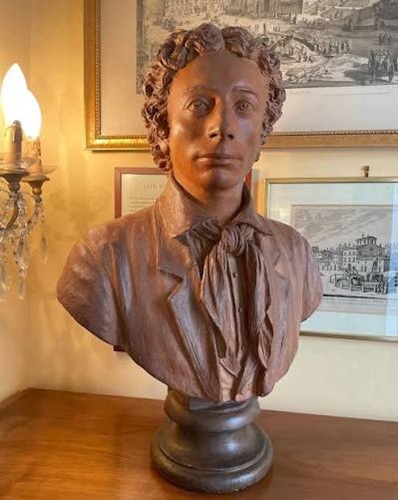
Borstbeeld van John Keats in het Keats-Shelley House in Rome
Zie voor nog meer gedichten over Halloween ook alle tags voor Halloween op dit blog.
Zie voor de schrijvers van de 31e oktober ook mijn blog van 31 oktober 2018 deel 1 en eveneens deel 2.