
De Engelse schrijver Martin Amis werd geboren op 25 augustus 1949 in Cardiff, South Wales. Zie ook alle tags voor Martin Amis op dit blog.
Uit: The Rub of Time: Bellow, Nabokov, Hitchens, Travolta, Trump.
“Saul Bellow, As Opposed to Henry James
Whereas English poetry ‘fears no one’, E.M. Forster wrote in 1927, English fic-tion ‘is less triumphant’: there remained the little matter of the Russians and the French. Forster published his last novel, A Passage to India, in 1924, but he lived on until 1970 – long enough to witness a profound rearrangement in the balance of power. Russian fiction, as dementedly robust as ever in the early years of the century (Bulgakov, Zamyatin, Bely, Bunin), had been wiped off the face of the earth; French fiction seemed to have strayed into philosophical and essayistic peripheries; and English fiction (which still awaited the crucial in-fusion from the ‘colonials’) felt, well, hopelessly English – hopelessly inert and inbred. Meanwhile, and as if in obedience to the political reality, American fic-tion was assuming its manifest destiny. The American novel, having become dominant, was in turn dominated by the Jewish-American novel, and everybody knows who dominated that: Saul Bel-low. His was and is a pre-eminence that rests not on sales figures and honorary degrees, not on rosettes and sashes, but on incontestable legitimacy. To hold otherwise is to waste your breath. Bellow sees more than we see – sees, hears, smells, tastes, touches. Compared to him, the rest of us are only fitfully sentient; and intellectually, too, his sentences simply weigh more than anybody else’s. John Updike and Philip Roth, the two writers in perhaps the strongest position
to rival Bellow, or to succeed him, have both acknowledged that his seniority is not merely a question of Anno Domini. Egomania is an ingredient of literary talent, and a burdensome one: the egomaniacal reverie is not, as many suppose, a stupor of self-satisfaction; it is more like a state of red alert. Yet American writers, in particular, are surprisingly level-headed about hierarchy. John Berry-man claimed he was ‘comfortable’ playing second fiddle to Robert Lowell; and when that old flagship Robert Frost sank to the bottom, in 1963, he said impulsively (and unsentimentally), ‘It’s scary. Who’s number one?’ But that was just a rush of blood. Berryman knew his proper place. Rather impertinently, perhaps, you could summarise the preoccupations of the Jewish-American novel in one word: ‘shiksas’ (literally, ‘detested things’). It transpired that there was something uniquely riveting about the conflict between the Jewish sensibility and the temptations – the inevitabilities – of materialist America.”

De Amerikaanse dichter Charles Wright werd geboren op 25 augustus 1935 in Pickwick Dam, Tennessee. Zie ook alle tags voor Charles Wright op dit blog.
Diep in de mijnen
Want ik ben iemand die bestaat uit het onverdeelde,
zei hij, en ik ben vervuld van licht.
En duisternis is daar,
waar de verdeelden staan.
Hardnekkige woorden, Geweldige, harde woorden.
Witte wolken pakken zich samen langs de bergkam.
Onder de aarde zijn we ver van huis,
of juist dichterbij.
Vertaald door Frans Roumen

Onafhankelijk van geboortedata
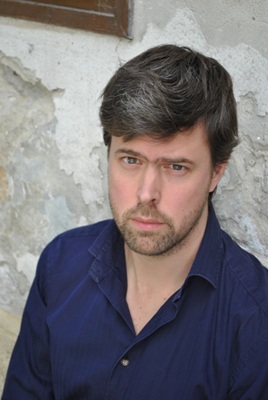
De Hongaars-Britse schrijver David Szalay werd geboren in 1974 in Montreal, Canada. Zie ook alle tags voor David Szalay op dit blog.
Uit: Het vlees (Vertaald door Auke Leistra)
“Als hij vijftien is, verhuist hij met zijn moeder naar een nieuwe stad en begint hij op een nieuwe school. Dat is niet makkelijk op die leeftijd – de verhoudingen op school liggen al vast en het kost hem moeite om vrienden te maken. Na enige tijd heeft hij met één jongen vriendschap gesloten, ook een eenling. Soms hangen ze na school samen rond in het nieuwe, typisch westerse winkelcentrum dat niet lang daarvoor geopend is. Heb jij het ooit gedaan?' waagt zijn vriend.Nee; zegt lstván. ‘lk ook niet; zegt zijn vriend, en op een of andere manier lijkt het of het niet eens zo moeilijk is dat toe te geven. Hij praat heel eenvoudig, heel natuurlijk over seks. Hij vertelt lstván over welke meisjes op school hij fantaseert, en wat hij in zijn fantasie met ze doet. Hij zegt dat hij zich vaak vier of vijf keer op een dag aftrekt, wat lstván het gevoel geeft dat hij tekortschiet, aangezien hij het maar één of twee keer doet. Als hij dat bekent, zegt zijn vriend: lij hebt waarschijnlijk een minder sterke behoefte aan seks: Misschien is dat wel zo, weet hij veel. Hij heeft geen idee hoe het voor andere mensen is. Hij kent alleen zijn eigen ervaring. Op een dag vertelt zijn vriend dat hij het gedaan heeft met een meisje dat aan de andere kant van het spoor woont. Het nieuws heeft iets desoriënterends.
István luistert als zijn vriend, vrij gedetailleerd, beschrijft wat er gebeurd is. Hij probeert uit te vogelen of zijn vriend de waarheid spreekt of dat hij liegt. Hij zou liever hebben dat hij loog, maar heeft toch het idee dat hij waarschijnlijk de waarheid spreekt. Sommige dingen die hij zegt zijn te specifiek, te verrassend, die kan hij nooit verzonnen hebben. Dan, een paar dagen later, zegt hij dat hij het meisje heeft gesproken en dat ze gezegd heeft dat ze het ook wel met lstván wou doen. ‘Serieus?’ zegt lstván. la; zegt zijn vriend. lstván weet niet of hij bedoelt alle drie samen, of alleen hij met dat meisje. Hij is niet zelfverzekerd genoeg om het te wagen. Diezelfde dag lopen ze na schooltijd over de voetgangersbrug naar de andere kant van het spoor. Het begint al donker te worden.”
Zie voor nog meer schrijvers van de 25e augustus ook mijn blog van 25 augustus 2020 en eveneens mijn blog van 25 augustus 2018 deel 1 en eveneens deel 2.